
Farmers warn ban on Chinese-made drones threatens US agriculture
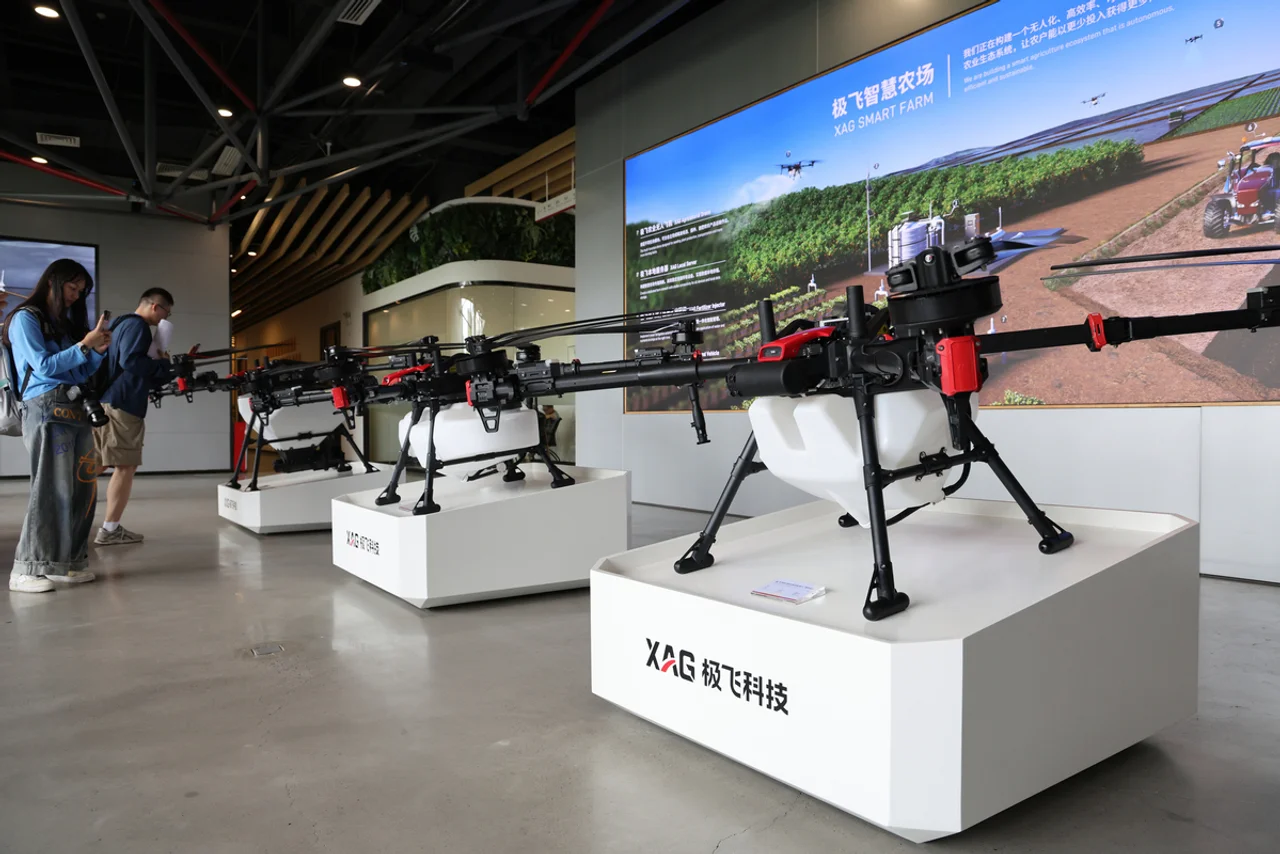
For Tony Zenari, a drone is a tool as essential as a tractor, used daily to check on crops, monitor weed control and track flooding in his fields. For Nick Grott, a combat veteran, agricultural drone applications gave him a professional purpose, something he had searched for since his honorable discharge. And for William B. Blaylock II, a drone is what lets him inspect rooftops and farm buildings, and search for lost or injured cattle across wide stretches of land in a fraction of the time it once took.
Their stories, submitted as public comments to the US Federal Communications Commission (FCC), are among more than 32,000 filed by US farmers, agricultural spray operators, search-and-rescue teams and small business owners calling for the reversal of a ban on Chinese-made drones. They say the technology has transformed how they work, and the sudden cutoff, they warn, would inflict real and immediate harm.
The FCC announced in December that it would add all new foreign-made drones and critical components, including those from Chinese drone maker DJI, to its “covered list” of communications equipment and services deemed to pose “an unacceptable risk” to US national security. While the agency has since exempted some drones from the list, the restrictions still fall short of clearing the way for camera-equipped drones made by DJI and another Chinese manufacturer, Autel.
DJI filed a petition in January challenging the FCC’s decision, arguing it violates constitutional and federal law. Ahead of a May 11 public comment deadline, the agency was flooded with submissions, overwhelmingly from farmers, ag-spray specialists and small operators urging regulators to reconsider.
The FCC has extended the comment window to Aug 28, after DJI submitted an independent cybersecurity audit into the record on June 9. That assessment, conducted by US firm OnDefend, found no evidence of hidden backdoors, no data transmissions outside the United States, and no viable pathway for the drones to be hijacked or weaponized, according to the report. DJI’s petition now sits with the FCC’s Office of Engineering and Technology and the full five-member commission, awaiting a final ruling.
In his comment filed in May, Zenari described how difficult it has already become to obtain parts, repairs or new units for his small family farm, work that DJI drones used to handle in a few hours. Without them, he said, the farm would be forced back onto diesel-burning tractors costing thousands of dollars a week to operate. “It must be reconsidered. If not, the environment and the future of farming will suffer greatly,” he wrote.
Andrew Adams of Aerial Acres AG, LLC in Michigan said agricultural drones now deliver precision, efficiency and cost savings at a moment when farm margins are tight and input costs are climbing, which allows growers to apply crop protection products and nutrients with pinpoint accuracy while cutting waste and environmental impact.
For small and mid-sized operations especially, he said, the technology has helped level the playing field against larger competitors. He warned that placing DJI on the FCC’s covered list “risks disrupting these benefits without clear evidence that agricultural use cases pose a meaningful security threat”.
Aaron Wright, founder of Whiskey Mike Drone Solutions, has used DJI spray drones, including the Agras T-40 and, more recently, an EAVision J150, to treat thousands of acres for farmers. He said, in his comment, that American-made alternatives are still not close to matching DJI’s hardware and software.
“Please don’t force small businesses to choose between what works best for them and an inferior product. Capitalism is all about free choice in the marketplace. Give DJI a chance to prove if they are indeed a threat to our national security or not,” he wrote.
A recurring theme across the comments is that the FCC’s restrictions rest on national-security claims that operators say have not been substantiated.
Blaylock said he supports “reasonable security standards”, but broad bans on foreign-built drones would instead create hardship for the responsible users who rely on them daily. “For many Americans, currently available foreign-manufactured drones provide the best combination of affordability, reliability, camera quality, flight safety features and ease of use,” he wrote, adding that cutting off access without practical alternatives would hurt lawful civilian, agricultural and creative work nationwide.
Grott, who founded the Indiana Spray Drone Association and now operates Patriot Aerial Solutions, said he has spoken extensively with operators across his state and found the “overwhelming feedback” is that an abrupt cutoff is not workable.
He began his business with a DJI T40 and is now scaling toward multiple DJI T100 aircraft. Wanting to support American manufacturing, he said, he invested in a domestically marketed platform, the Gteex Revolution I-19, and found things to like in its flight characteristics, application speed and swath width. But its software reliability, video transmission and controller connectivity fell short, while these features are essential for safety and operational success in agricultural aviation, he said.
“A direct cutoff or accelerated ban on Chinese-manufactured drone platforms could severely impact small businesses like mine that have invested heavily into this industry under the current regulatory environment,” Grott wrote.
Experts and operators alike say US-made drones are not yet positioned to replace Chinese models in the near term, particularly because key components such as batteries and motors, many of which are themselves on the FCC’s covered list, cannot simply shift from Chinese to domestic production overnight.
A 2023 US Department of Agriculture report identified drones as a core part of the precision-agriculture toolkit needed to address rising production costs, climate change and labor shortages, supporting the scouting, mapping and data collection that guide farming decisions.
The American Spray Drone Coalition found that 93.5 percent of the 8,950 spray drones sold in the US in 2024 were Chinese-made. Total sales fell to 3,711 units in 2025, with the Chinese-made share dropping to 75.8 percent amid a sharp decline in DJI imports.
Volitant Technologies LLC, a Nebraska-based agricultural drone retailer serving hundreds of farmer customers, said DJI’s Agras series has become “the operational backbone of precision agriculture for thousands of US farms” at a time when growers are facing some of their toughest economic conditions in years.
Losing access to new models and firmware updates, the company said, would leave US farmers with degraded performance, decreased yields and no viable path to next-generation precision tools without absorbing additional costs.
“This is not a theoretical future harm,” Volitant Technologies wrote in its comment. “Farmers are already making contingency plans for a supply chain that may not be there in two years.”
chinadaily
Photo/Xinhua
Apd News
World News
- 1Two metropolises seek common ground through city dialogue
Two metropolises seek common ground through city dialogue
2 hours ago - 2Farmers warn ban on Chinese-made drones threatens US agriculture
Farmers warn ban on Chinese-made drones threatens US agriculture
3 hours ago - 3US Supreme Court rules against Trump's order to limit birthright citizenship
US Supreme Court rules against Trump’s order to limit birthright citizenship
1 day ago - 4China keen to support African nations at UN
China keen to support African nations at UN
2 days ago - 5CIIE a platform to enhance Sino-French trade relations
CIIE a platform to enhance Sino-French trade relations
2 days ago - 6Venezuela quake death toll rises to 1,450
Venezuela quake death toll rises to 1,450
3 days ago - 7Truce comes under strain as US, Iran trade strikes
Truce comes under strain as US, Iran trade strikes
3 days ago - 8Automated driving global code greenlit
Automated driving global code greenlit
4 days ago